From the outside it may seem like a simple infrastructure, but no two projects are alike. One location may require to transport wastewater uphill from a new housing development or another one may have to maintain water pressure across commercial properties due to changing elevations and growing demand. Some projects are industrial, while others are municipal. Each site has specific requirements regarding design, regulations and long-term goals.
Pumping systems can’t be designed to meet the needs of all. The station’s success is based on the reality of the site and its flow characteristics. It additionally considers the requirements of the owner as well as the potential future requirements of the property. Romtec Utilities approaches each project in this manner, modifying the package pumping system for your project’s requirements rather than imposing a generic solution to be implemented.
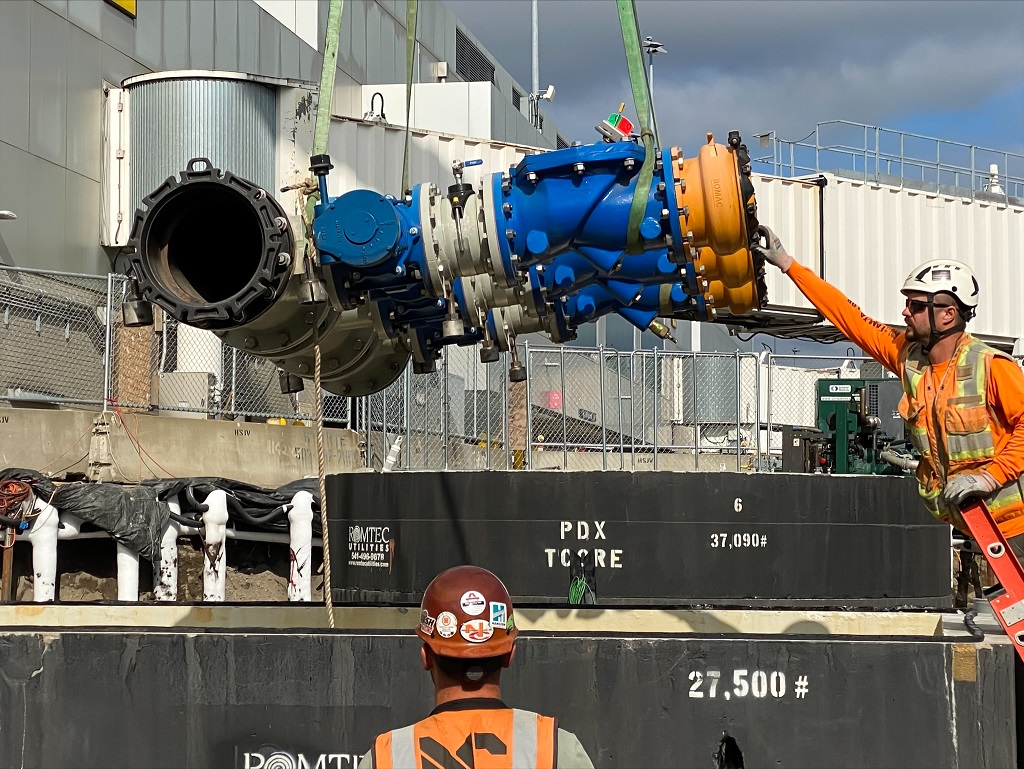
Good pumping design is about more than simply moving water
Pumping stations are made to move water and waste in cases where gravity is not enough. However, designing a system that just functions isn’t enough. It has to be efficient, reliable, easy to maintain, and in full compliance with the requirements of state and local authorities. It needs to be able to work not just in theory, but also on a regular basis for the people who are responsible for using it.
It encompasses everything starting from the structural layout to the size of the wells, controls, electrical equipment communications systems, as well as access for crews. The system can be plagued with operational issues for years if even one element is not designed correctly. This is one reason owners and engineers place so much value on working with the best lift station designers. When you’re trying to balance the budget, constraints on site the hydraulic performance, and long-term durability expertise is crucial.
Romtec Utilities brings these fields all under one roof. Instead of requiring customers to manage multiple vendors for various parts of the station, the company handles the mechanical, structural, electrical, and communications components as a complete system. The single-source model can simplify and speed up the process of procuring and also speed up installation.
Designed correctly, packaged pumping systems are simpler.
A system of package pumping can simplify infrastructure projects due to the fact that it combines key components into a single solution. The real value is in how well the package has been created. An unmatched system could cause issues with performance, equipment that is too large and unnecessary expenses, as well as longer-term maintenance issues.
Romtec Utilities views each package more as a complete solution rather than an ordinary item. This means that the specific site needs will decide which pumps, control valves, enclosures, and piping are most appropriate for the job. It also means thinking about how the system will be monitored, the way operators will access it and how it will be efficiently maintained over time. Coordinating the planning phase will help avoid bigger issues with utility infrastructure.
Booster pump stations address a different kind of infrastructure problem
There are many projects that focus on water treatment. In many projects, maintaining water pressure is the same as removing sewage. Pumping stations for boosters play a significant role. They are built to ensure water flow is efficient through the distribution system in cases where elevation changes, long pipeline runs, or a peak demand could cause pressure issues.
The structure of booster systems is generally different from other types of systems. They could require control facilities, variable-frequency drives, SCADA integration and telemetry. Romtec Utilities creates these stations with a specific mindset which is used in the design of wastewater systems. This ensures the end result will work both functionally and operationally.
A better plan leads to higher performance in the long run
Romtec Utilities offers early design assistance to customers. This is among its most valued features. The initial engineering and design support enables teams on project teams to gain a better understanding of the nature, structure and cost of an installation before they get too far into the procurement or construction. It can make a significant difference for consultants, developers as well as public agencies that are trying to ensure that projects stay on track and within budget.
Planned design is the key to achieving success. A good design partner can do more than just supply equipment. A reliable design partner will help develop a viable solution that fits the site and is in line with the goals of the owner.
In utility work, the best systems are often the ones the public never notices because they just work. This kind of reliability is rarely a result of random chance. It’s the result of an enlightened engineering approach, effective coordination and a clear understanding of how to design each system to the actual needs of the project.