A significant contract is won by an industrial manufacturer. The monthly production needs increase but the company doesn’t have more space and has employees with previous experience or extra hours during the daytime. A temporary increase in production might be possible, but the addition of a shift could introduce new labor requirements training, supervision, and quality control.
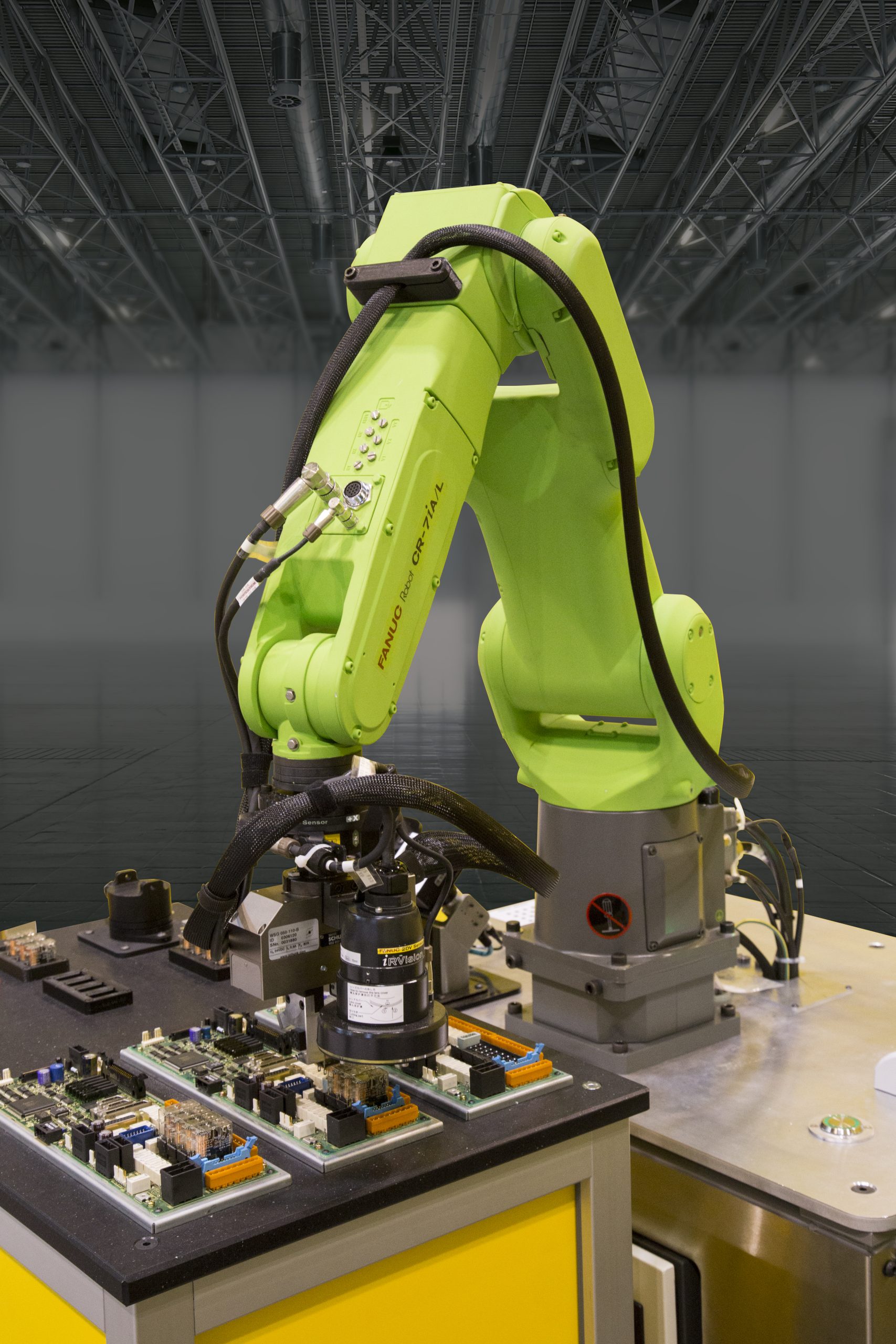
Image credit: automatedsolutions.com.au
Situations like this reveal the purpose behind robotic automation. Robotics doesn’t just mean replacing human workers with machines. When used in the right way it can alter how manufacturers use the production capacity they already have.
Look at the Seconds That disappear between products
Inefficient manufacturing isn’t always evident. Imagine a worker taking 15 minutes searching for a part, 10 seconds applying the material, and then a few seconds moving it. With a single component the difference in time is not significant. Repeated thousands of times however, those seconds become significant production time.
Same goes for waste material. This is also true for the waste material.
Businesses considering robot automation Australia projects may benefit from looking at these small loss events repeatedly before deciding on the equipment they will require. The analysis provided by ASA is designed to uncover bottlenecks and quality issues, as also additional constraints and waste during a project.
A Robot Has to Fit the Process Itself
A robot is only one of the many engineering choices. Guardings, tools, controls sensors, conveyors, and fixtures might also be needed. Engineers must consider the reach and payload of the robot while determining how the robot will move about its area of work and interact with the environment around it.
The FANUC approach of ASA’s approach to robot automation encompasses concept development, system design including CAD Simulation, offline Programming. Digital simulation allows engineers to test configurations and estimate durations of the cycle before the system is operational at the customer’s factory floor. It’s especially useful when there is a small area or new robotics requires integration with the production line.
Painting and Dispensing demonstrate why It’s Important to Repeat
Certain manufacturing processes demonstrate the importance of controlled movements. Imagine applying a coating on hundreds of parts. The final result doesn’t come from complete each component at a rapid pace. It’s important to control the speed, distance, and movement of each part from the beginning to the at the very end.
ASA has experts who deal in the field of dispensing and painting across various industries, including aeronautics, automotive and aerospace. In these environments, industrial robotic automation can provide repeatable programmed movement while also reducing employee exposure to physically demanding or potentially hazardous processes.
Reduced wasted materials and an increase of productivity can be accomplished by better control.
Even after installation the system requires individuals
Automation doesn’t substitute for manufacturing expertise. It changes the skills required to manage and maintain the manufacturing process.
Employees must be able to operate equipment safely be aware of abnormal behavior or malfunctions, then troubleshoot the issue and perform appropriate maintenance. Processes and programs are able to be changed later if production requirements are changed.
ASA provides training on site including programming, safety troubleshooting, mechanical and electric maintenance. They also provide servicing and assistance for assessing equipment condition, and addressing wear throughout the lifespan of the equipment.
Capacity is greater than working faster
For Australian manufacturers, increasing capacity doesn’t necessarily mean purchasing more space or increasing the amount of labor required to perform repetitive tasks. Sometimes, the more important question is whether or not the existing manufacturing process can be designed differently.
ASA has been working on and integrating automation solutions in Australia since 2002. We also provide support for projects overseas. The approach combines needs analysis, engineering, simulation, FANUC robot integration Training, and servicing.
Automation is not the goal. A worthwhile system should give manufacturers something tangible in yield, more stable production with consistent quality, safe procedures, less waste or a larger capacity for the existing factory.